
Views: 0 Author: Site Editor Publish Time: 2026-01-07 Origin: Site


You have the perfect logo, a catchy slogan, and a design that pops. Now, you need to put it on a product that people will actually keep. A customized bottle opener is a classic choice for a reason—it is functional, durable, and frequently used in social settings. However, not all openers are created equal. The material you choose determines how the opener feels in the hand, how long it lasts, and how sharp your design looks after years of use.
Choosing the right metal can be the difference between a beloved keepsake and a piece of junk that bends on the first bottle cap. Whether you are looking for a sleek credit card opener for a wallet or a heavy-duty wall-mounted piece for a bar, understanding the metallurgy behind the merchandise is essential.
This guide answers the most common questions about bottle opener materials, helping you select the perfect substrate for your personalized bottle opener project.
The base material dictates the weight, durability, and finishing options of your product. If you are creating a premium gift for high-end clients, a lightweight aluminum opener might feel too "cheap." Conversely, if you need a budget-friendly giveaway for a massive trade show, heavy brass might destroy your shipping budget.
Here is how the material impacts the final product:
Durability: Can it handle the torque of prying off a cap without bending?
Aesthetics: Does it take plating (like gold or silver) well? Can it support 3D designs?
Weight: Does it feel substantial and expensive, or light and portable?
If durability is your top priority, stainless steel is generally the king. It is incredibly hard, resistant to bending, and naturally fights off rust and corrosion.
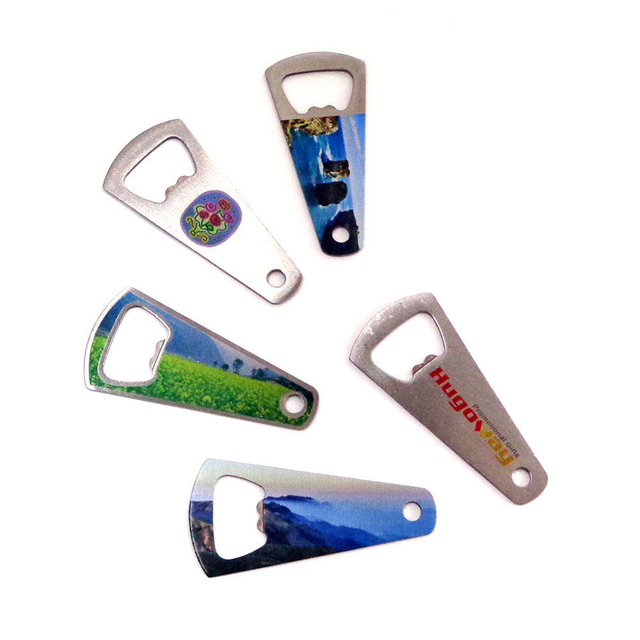
Stainless steel is the ideal material for thin profiles that need to remain rigid. This is why it is the standard choice for the popular "credit card" style openers. Because the metal is so strong, manufacturers can use a thinner gauge (thickness) without worrying about the opener warping when it catches a bottle cap.
For example, Wholesale Wine Zinc Alloy Wall Mounted Printed Credit Card Beer Bottle Openers and similar flat styles rely on the tensile strength of steel to fit perfectly into a wallet credit card slot while remaining heavy-duty enough to resist cracking. If you want a sleek, modern look that can survive the elements, stainless steel is your best bet.
Zinc alloy is perhaps the most versatile material in the promotional product industry. While stainless steel is hard and rigid, zinc alloy is castable. This means it is injected into a mold in a liquid state, allowing for incredible 3D detail and complex shapes.
If your design involves:
Intricate logos with raised and recessed areas.
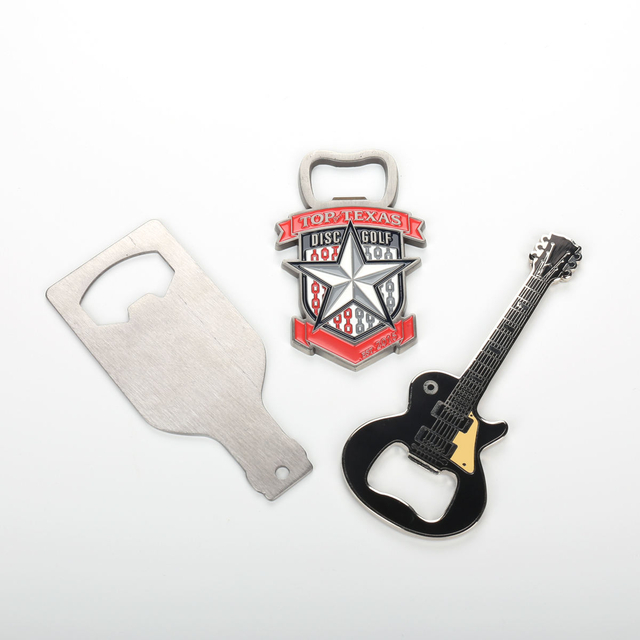
Unique cut-outs (like the shape of a guitar, an animal, or a specific product).
A "heavy" feel without the extreme cost of solid brass.
Then Zinc Alloy is the winner. It is heavier than aluminum but softer than steel, which allows for deep relief in the design. It is also the preferred base metal for enamel bottle openers, where colored enamel is filled into the recessed areas to match your branding colors.
Aluminum is the lightweight champion. If you are mailing thousands of openers or handing them out at a marathon, aluminum is significantly lighter than zinc or steel.
The Pros:
Cost-Effective: Usually the most affordable option.
Color Variety: Aluminum can be anodized in vibrant metallic colors (red, blue, green, purple) that become part of the metal surface.
Lightweight: Great for keychains where you don't want to weigh down a set of keys.
The Cons:
Softer Metal: It can scratch easier than steel.
Perceived Value: Because it is light, it can sometimes be perceived as less "premium" than a heavy brass or zinc alloy piece.

To help you visualize the differences, here is a breakdown of the most common materials used for customized bottle openers.
Material | Weight | Durability | Best Finishing Option | Ideal For |
|---|---|---|---|---|
Stainless Steel | Medium | High | Laser Engraving / Printing | Credit card styles, slim profiles, outdoor use. |
Zinc Alloy | Heavy | Medium-High | Plating / Enamel Fill | 3D shapes, intricate logos, premium gifts. |
Aluminum | Light | Medium | Anodizing / Laser Engraving | Large quantity giveaways, colorful keychains. |
Brass/Copper | Very Heavy | High | Antique Finishes | Challenge coins, military/commemorative gifts. |
Iron | Heavy | High | Soft Enamel | Budget-friendly heavy openers with color. |
If you are looking for that gritty, vintage, or industrial aesthetic, you should look toward Brass, Copper, or Iron (or a Zinc Alloy plated to look like them).
These materials take "antique" plating exceptionally well. In this process, the metal is plated (e.g., in bronze), and then a dark wash is applied and buffed off. The dark wash stays in the crevices of your design while the raised areas shine. This creates high contrast and makes text very readable without using colored ink.
This style is particularly popular for:
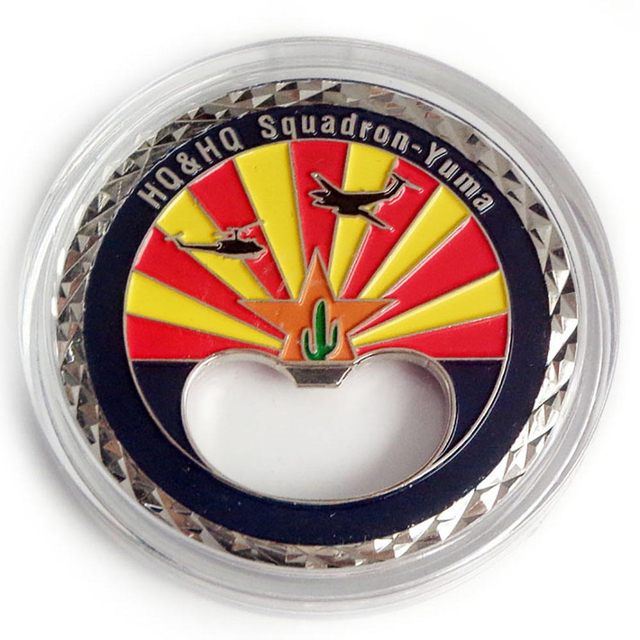
Challenge Coin Bottle Openers: Thick, heavy, round openers often used by military, police, and fire departments.
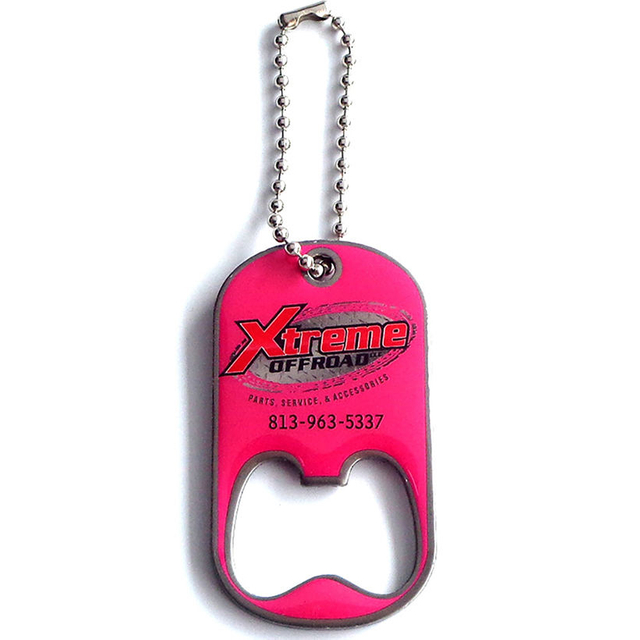
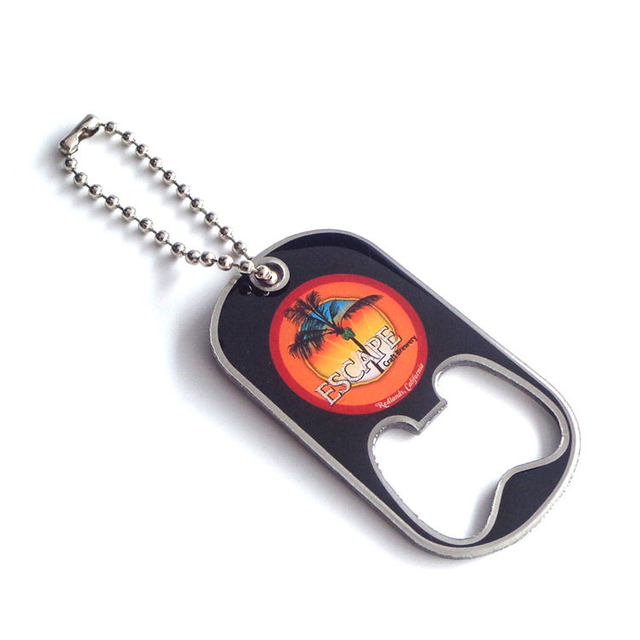
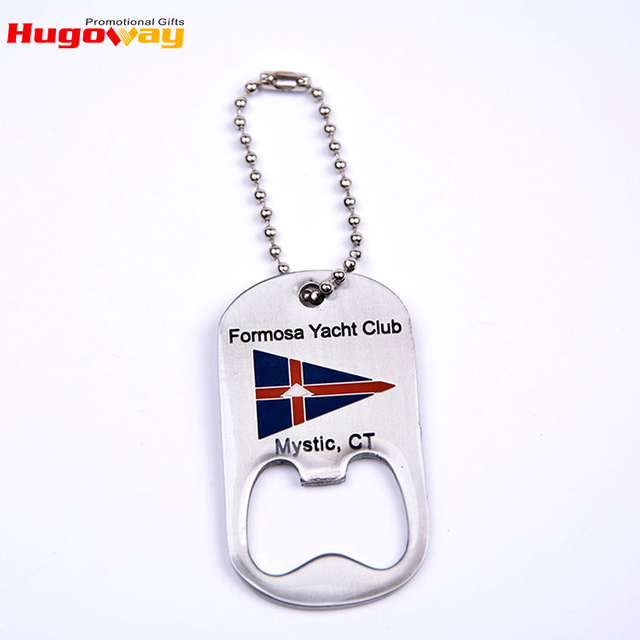
Dog Tag Bottle Openers: A rugged, wearable style that works well with an antique silver or brass finish.
Yes. Often, a customized bottle opener isn't just a slab of metal. It might be a functional piece of art. For example, a Print Bottle Opener might feature a stainless steel body for strength, coated with an epoxy dome to protect a full-color printed image.
Alternatively, you might choose a Keychain Bottle Opener that utilizes a strong iron base for the opener mechanism but includes a soft leather or PVC attachment for branding.
The material you choose dictates how your logo is applied.
Die Struck / Die Casting (Zinc, Iron, Brass): Your logo is part of the mold. It is raised metal against recessed metal. This is permanent and will never rub off.
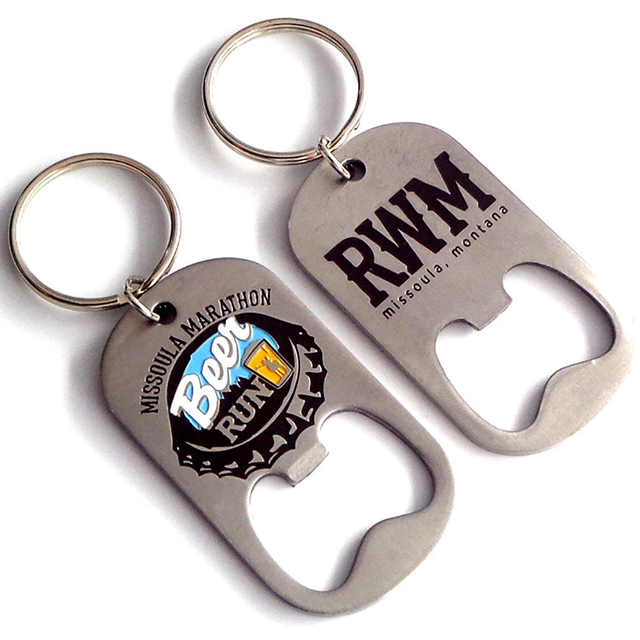
Laser Engraving (Stainless Steel, Aluminum): A laser burns the top layer of metal. On anodized aluminum, this reveals the white metal beneath the color for a stark contrast. On stainless steel, it provides a subtle, sophisticated tone-on-tone look.
Offset Printing: Used when you have a complex logo with gradients or photographs. This is usually done on flat steel or aluminum surfaces and often covered with a clear epoxy coating to prevent scratching.
Once you have settled on a material, the form factor is the final piece of the puzzle. Hugoway offers a vast array of styles, and matching the style to your audience is key.
For the Corporate Professional: Go with a Credit Card Bottle Opener. It is sleek, stainless steel, and fits in a suit pocket or wallet. It implies efficiency and preparedness.
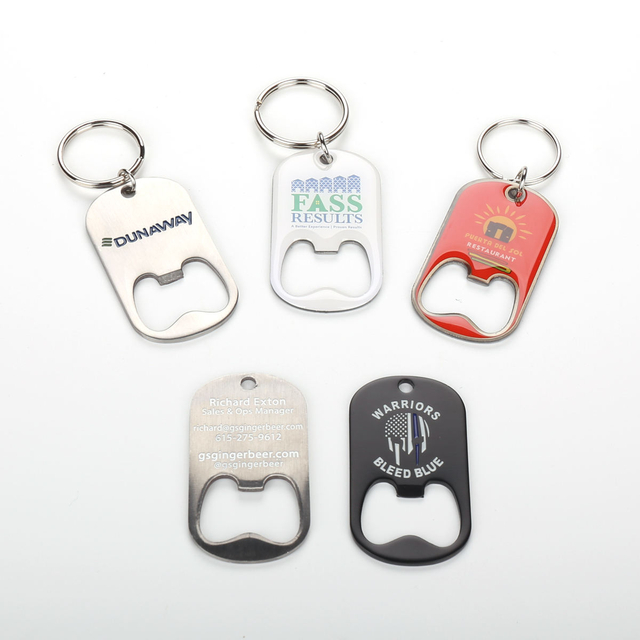
For the College/Bar Crowd: A Keychain Bottle Opener or an Enamel Bottle Opener with bright colors. These are fun, highly visible, and always with the user.
For the Home Decor Enthusiast: A Wall-Mounted Bottle Opener. Usually made of Zinc Alloy or Iron, these are permanent fixtures in a home bar or "man cave." Your brand becomes part of their furniture.
For the Collectible Market: A Challenge Coin Bottle Opener. These are heavy, substantial, and often traded or displayed rather than just used.
Selecting the best material for your customized bottle opener ultimately depends on balancing your budget with your desired aesthetic. Whether you need the heavy-duty reliability of stainless steel or the 3D artistic capabilities of zinc alloy, the metal you choose sends a message about your brand.
At Hugoway, we offer a wide range of custom bottle opener styles, including bottle opener keychains, challenge coin openers, dog tags, printed openers, and enamel designs. From intricate die-cast molds to sleek printed steel, we can help you manufacture the perfect product.
Ready to start your project? Please feel free to send your design to us, and let's build something durable together.